
I’m doing something new.
For the first time in a long while, I’m working on a book that does not belong in the children’s-literature category. I will always love writing for younger readers. I appreciate the clarity it requires and the way it insists that a story mean something. Being able to impact and inspire young people is a special reward that goes beyond anything I could ever have imagined.
This new project is asking something different of me, and I think it will offer a different kind of reward.
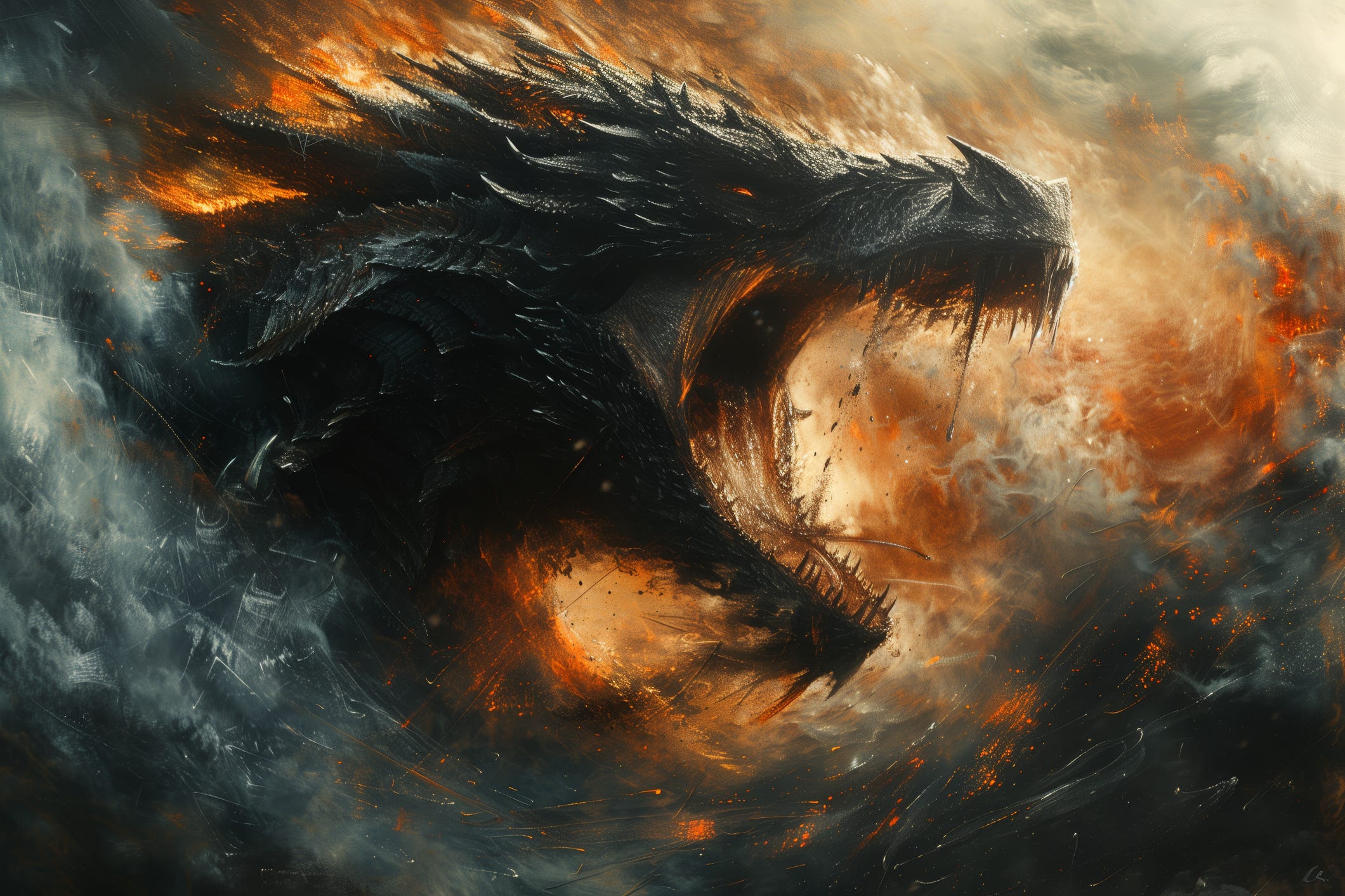
I’m working on an epic fantasy.
I’ve been a fan of fantasy for most of my life. I love ancient magic and dangerous roads, distant capitals and buried histories, armies on the move, monsters in the dark, and choices large enough to reshape nations. Epic fantasy gives us a world broad enough to hold prophecy, war, faith, power, and the long shadows of the past.
And it also has dragons!
One of my goals is to continue to tell stories that mean something. I am not interested in the scale of epic fantasy for its own sake. A continent-spanning conflict does not automatically become meaningful because it has a map, a throne, or an ancient enemy behind it. But what I’ve learned over the fifty years I’ve spent on this Earth is that meaningful stories are epic in and of themselves. And what constitutes a person’s world only matters if it has personal stakes. It’s about building characters the reader cares about and challenging them with world-spanning impact.
So the aim of this project is simple, even if the execution is not: epic stakes, personal impact.
I want to write about a world in motion without losing sight of the individual people trying to survive inside it. I want the fate of cities and kingdoms to matter because it changes what happens at a kitchen table, in a stable at midnight, on a long road, or in the moment someone realizes they may not be able to return home unchanged.
The World Is Big. The Story Is Close.
One of the biggest elements of writing fantasy is worldbuilding. I have a love/hate relationship with that.
I love the questions it makes possible. Who built the fortress on the hill? What old violence created the border everyone now treats as permanent? Which stories do people tell their children to make them feel safe? Which stories are actually warnings? What is the role of magic, and how does it work? What does a society choose to remember, and what does it need to forget in order to preserve the version of itself it prefers?
But the world itself is not the story. And that’s what I hate: there’s so much work that needs to be done outside of the story that no one will ever see.
I’ve chosen in this equation to err on the side of what is sometimes called “Vibe World Building.” Rather than getting too bogged down in the details of my 10,000 years of history (that no one cares about…), I’m establishing the tone and vibe I need and the handful of details that matter. I’m building the scaffolding I need and will fill in the details as I need them.
The focus needs to be on the story. Remember my mantra: epic stakes, personal impact.
A character can be asked to protect something that may change the future of the world. The question is not only whether they succeed. The more important question is what that task asks of them emotionally. What do they have to give up to take that mission? Do they even realize the impact it might have? Beyond that… What do they fear? What do they hide? What are they trying to prove? Whose approval do they still crave, even when they know it may never come?
Four Boys, Four Kinds of Strength
With so much male-coded fantasy, it got me thinking about a central question: What does it mean to be a man? In a fantasy world or otherwise…
At the heart of my story are four boys whose lives become entangled with events much larger than any of them understands at the beginning.
Epic stakes. Personal Impact.
I am deliberately building them against a familiar fantasy pattern. Too often, boys in adventure stories are allowed to be brave, angry, funny, reckless, gifted, or violent. But tender? Caring? Artistic? Not as often. Their emotional lives are frequently flattened into a narrow range of acceptable responses. They can smirk. They can fight. They can sacrifice themselves in a grand gesture. But they are rarely allowed to be afraid, nurturing, observant, or openly in need of comfort without the story treating those qualities as weaknesses to be overcome.
Tenderness should not be a character flaw for male characters.
In short, I want to make room for a different kind of manhood.
Each of my four central characters carries a quality that can be dismissed, feminized, underestimated, or treated as secondary in stories about war, magic, and heroism. In this book, those traits are not decorative. They are forms of strength. They are survival skills. They are part of what makes these boys capable of changing the world around them. As one fellow author put it, they are their superpowers.
One boy is a healer. His instinct is to notice pain—physical pain, certainly, but also the injuries people hide because they have been taught that admitting hurt is shameful. Healing is often treated as passive in fantasy: an ability that happens after the real action, a convenience that erases consequences, or a role assigned to someone standing safely outside the danger.
I am more interested in healing as courage.
To heal is to stay when someone else is bleeding. It is to look closely when others turn away. It is to take responsibility for another person’s vulnerability and to keep caring even when care is inconvenient, frightening, or unwelcome. A healer is not weak because he refuses to abandon the wounded. He may be the bravest person in the room because he understands exactly what violence costs.
One boy is nurturing. This character is practical, prepared, attentive to what everyone else needs. He is the one who remembers supplies, notices when someone has not eaten, tries to make a plan when fear begins to take over. Those qualities can be easy to overlook because they are quiet. In a traditional fantasy, the person who packs the rations, checks the route, and worries about everyone getting home can become comic relief. The overly anxious companion who needs to learn how to loosen up.
But care is not a joke.
To nurture other people is to see them as worth protecting. It is a refusal to accept that toughness means indifference. It is its own form of leadership. This boy may be anxious, but anxiety can also be evidence of love: he worries because the people around him matter. His growth will not be about becoming less caring. It will be about learning that he deserves the same patience and gentleness he gives so freely to others.
One boy is artistic. In a world shaped by violence and old stories, imagination can be a radical thing. This character sees beauty, possibility, and meaning where others may see only utility. He may be dramatic, playful, irreverent, or impulsive. He may use humor to survive. He may notice the shape of a sunset, the rhythm of a song, the face someone makes when they are trying not to cry.
Artistic boys are often pushed to the margins of fantasy stories unless their art can be converted into a weapon, a prophecy, or a special power. But art matters even when it does not save the world in an obvious way. It matters because it teaches us to see each other. It keeps memory alive. It gives people language for what they cannot otherwise say.
In this story, creativity is one of the ways a person remains human in the middle of danger.
One boy is intelligent. Not merely clever in battle or gifted with strategy, though he may be both. I mean emotionally intelligent, curious, thoughtful, and willing to question the systems around him. He is someone who thinks deeply about what he has been told, what he is expected to become, and whether those expectations deserve his obedience.
Intelligence is often rewarded in fantasy when it looks like cold calculation. The mastermind. The tactician. The one who always has an answer.
I want to explore a different kind of intelligence: the kind that asks better questions. The kind that notices contradictions. The kind that understands that knowledge without compassion can become another tool of power.
Together, these four boys represent a range of strength that is too often denied to male characters. They will still be frightened. They will still make mistakes. They will still be capable of anger, pride, jealousy, fear, and failure. But none of those emotions will make them less worthy of care.
And their tenderness will not make them less capable of adventure.
The reader will get to watch them grow up in a world that doesn’t respect their gifts and see how that impacts them as well as how they respond to that disdain.
The Cost of Becoming “Strong”
If it wasn’t already obvious, a major emotional thread in this project will be toxic masculinity: the set of pressures that teaches boys and men that their value comes from dominance, control, toughness, conquest, and emotional silence.
That pressure does not always arrive as obvious cruelty. Sometimes it looks like a father who never says he is proud. A commander who values obedience over honesty. A friend group that turns every sincere moment into a joke before it can become embarrassing. A culture that insists that fear is failure, that pain should be tolerated, that asking for help is weakness, and that tenderness is something to outgrow.
Those messages can become a kind of inheritance.
Boys learn to armor themselves long before anyone hands them a sword. They learn which feelings are permitted and which must be locked away. Anger may be allowed. Confidence may be rewarded. Grief, uncertainty, softness, affection, and terror are often treated as dangerous things. They are evidence of weakness, that someone is not man enough, not worthy of belonging.
I am interested in what happens when that armor starts to fall away.
Vulnerability is not easy, especially when everyone around you is telling you to “be tough.” One heartfelt conversation can’t erase the damage of systemic indoctrination. But being accepted for who you are can become the beginning of change. True friendship can make honesty possible. It might help a boy who has been taught that he must earn love to understand that love is not supposed to be a prize for performance.
This is not a story where violence and cruelty are ignored. I want to stare that violence in the face, take seriously what violence asks people to become. And maybe discover whether they can choose something else.
Why Fantasy Needs Tenderness
Fantasy is often about power. Who has it, who wants it, who inherits it, who abuses it, and who is crushed beneath it.
But power is not only magic, armies, crowns, or dragons.
Power is the ability to name yourself when someone else insists on naming you. It can be the courage to say, “I am afraid.” It can be tending to someone who has been taught they are difficult to love. It can be refusing to become cruel simply because cruelty has been done to you.
That is the kind of power I want this new project to explore.
The story will have danger. It will have adventure. It will have grand journeys and heroic quests. There will be journeys and conflict, choices that cannot be undone. It will have all the things that make people love epic fantasy.
But beneath all of that, I want to tell the story of four young men learning that strength does not require them to abandon their emotional lives.
I am still at the beginning of this process. I am still discovering the full shape of the world, the weight of its history, and the choices waiting for these characters on the road ahead. But I know the questions that will guide me through it.
I hope you come along for the journey!